Research Revolution: Exploring New Frontiers
Research has always been the foundation of knowledge and innovation, and in this modern era, research is no longer the same.
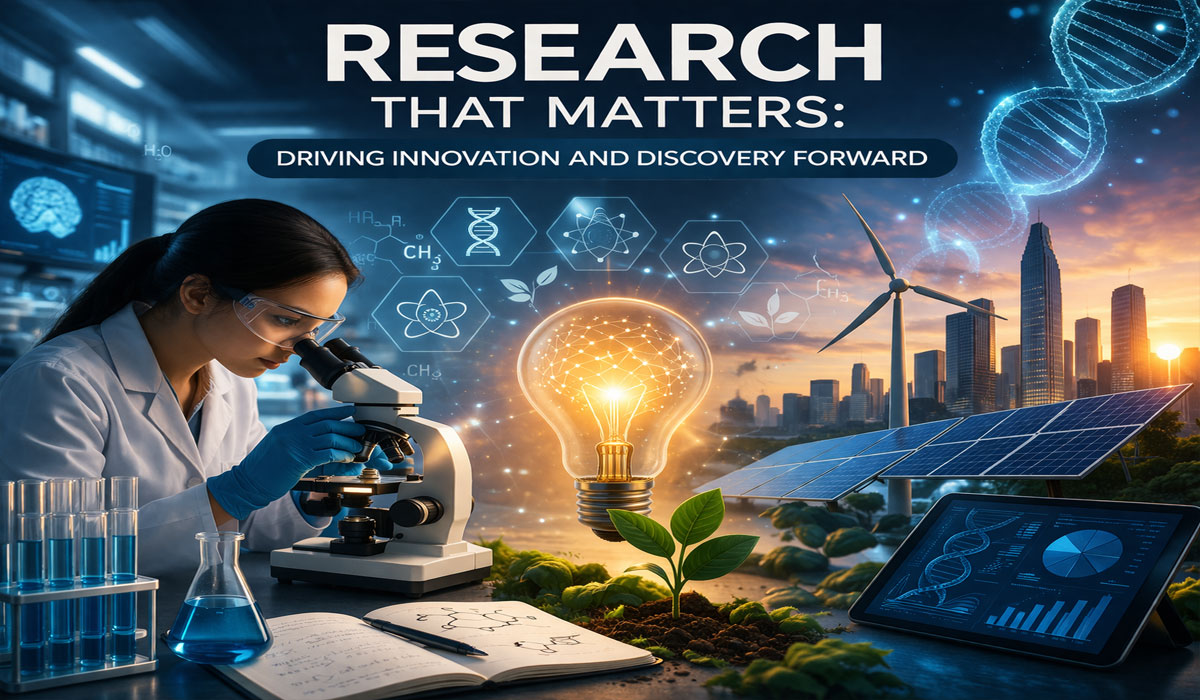
research is no longer confined to laboratories or academia; it extends into technology, business, and society. Understanding current trends and modern research methodologies helps researchers tackle emerging challenges and discover innovative solutions.
This TEACHING article discusses how research is evolving and shaping the future.
The Changing Landscape of Research
Modern research is increasingly interdisciplinary, bringing together experts from different fields to solve complex problems. For example, addressing climate change requires collaboration between environmental scientists, economists, and social scientists. Digital technologies have significantly transformed how data is collected and analyzed. Large-scale datasets, simulations, and real-time analytics enable researchers to generate insights faster than ever before.
Open access platforms and online journals have also made research more transparent and globally accessible. Researchers from different continents can now share findings, replicate studies, and build upon each other’s work in ways that were impossible just a few decades ago. This shift toward openness and collaboration is reshaping the scope and impact of modern research.
Innovative Research Methodologies
While traditional methods such as surveys, experiments, and case studies remain important, new approaches are emerging. Big data analytics, artificial intelligence (AI), and machine learning allow researchers to detect patterns, make predictions, and test hypotheses on a scale previously unimaginable. These technologies not only increase accuracy but also allow for deeper and more nuanced insights.
Participatory research, where communities, stakeholders, or end-users actively contribute to the research process, is also gaining momentum. This approach ensures that findings are relevant and applicable to real-world problems. Combining traditional and modern methodologies enables researchers to approach questions from multiple angles, producing richer and more reliable results.
Read Also: Adventure as Medicine: Boost Your Body and Mind Outdoors
Technology As a Catalyst
Technology has become an indispensable partner in research. AI, cloud computing, and advanced simulation tools have transformed the ways researchers work. Tasks that once required months, such as data cleaning or statistical analysis, can now be completed in hours. Predictive modeling and simulations allow researchers to explore hypothetical scenarios, reducing risks and costs associated with real-world experimentation.
Automation tools also streamline repetitive processes, allowing researchers to focus on interpretation, creativity, and strategic thinking. With technology as a catalyst, research has become faster, more accurate, and more capable of addressing complex global challenges.
Global Collaboration And Networking
The digital age has broken down geographical barriers in research. Online collaboration tools, virtual conferences, and international research networks make it easier than ever for scientists and scholars to work together across borders. Collaborative research fosters diverse perspectives, promotes innovation, and accelerates problem-solving.
Global partnerships are particularly important when tackling large-scale challenges such as pandemics, climate change, or social inequalities. By pooling expertise, resources, and data, researchers can generate solutions that are not only effective but also applicable on a global scale. Networking and collaboration are now central to the success of modern research projects.
Ethical Considerations in Modern Research
As research becomes more complex and data-driven, ethical considerations are increasingly important. Issues like data privacy, AI bias, informed consent, and reproducibility require careful attention. Researchers and institutions must maintain high ethical standards to ensure integrity, reliability, and public trust in their work.
Responsible research practices also include transparency, open communication, and accountability. Upholding these principles ensures that research not only advances knowledge but also benefits society and respects human rights. Ethical awareness is essential for sustaining the credibility and impact of modern research.
Conclusion
The research revolution is transforming the way knowledge is created, shared, and applied. Interdisciplinary collaboration, technological advancements, innovative methodologies, and ethical responsibility are reshaping the landscape of research. These changes make research more dynamic, efficient, and globally impactful.
By embracing modern tools and practices while maintaining ethical standards, researchers can explore new frontiers, solve pressing global challenges, and contribute to a more informed and innovative society. The future of research is bright, driven by curiosity, technology, and collaboration.
Image Source:
- First Image from: https://www.health.gov.au/
- Second Image from: https://newscenter.lbl.gov/
About the Author